Bitwarden vs 1Password: Which Password Manager Is Better?
Selecting a reliable password manager in 2026 involves more than just storing credentials. You need to consider security architecture, ease of use, and cross-platform compatibility.
Bitwarden and 1Password are two of the most popular options available, each with a strong reputation for keeping data safe. While both offer robust security, they cater to different user preferences and budgets. This guide compares Bitwarden and 1Password to help you decide which password manager best fits your security needs and daily routine.
Password Manager Recommendations
If you don’t want to read the full review, here’s the short answer:
- Best Overall for Most Users: 1Password
- Best Budget Option: Bitwarden
- Best for Families: 1Password
- Best for Tech-Savvy / Self-Hosting: Bitwarden
- Best for Business Teams: 1Password (slightly better admin controls)
Now let’s break it down in detail.
Related Articles You May Like:
Best Screen Recording Software for Windows & Mac (Free & Paid)
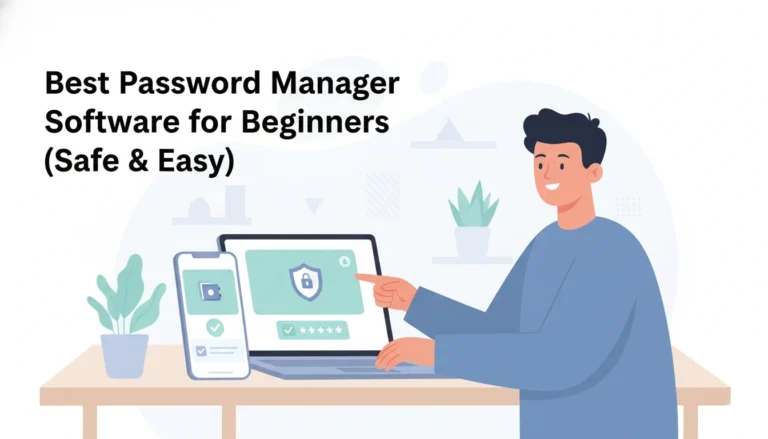
Best Password Manager Software for Beginners (Safe & Easy)
ChatGPT Plus Pricing – Is It Worth Paying in 2026?
Bitwarden Review
Overview
Bitwarden has built a strong reputation as the best affordable password manager with serious security credentials.
It’s open-source, independently audited, and offers one of the most generous free plans available.
Unlike many competitors, Bitwarden doesn’t aggressively lock features behind expensive tiers.
Core Features
1. Unlimited Password Storage (Even on Free Plan)
Most password managers limit free users. Bitwarden doesn’t.
You get:
- Unlimited passwords
- Unlimited devices
- Secure notes
- Basic 2FA support
For free.
That alone makes it extremely compelling for beginners.
2. End-to-End Encryption (Zero Knowledge)
Bitwarden uses:
- AES-256 bit encryption
- PBKDF2 SHA-256
- Zero-knowledge architecture
Even Bitwarden cannot see your vault.
3. Self-Hosting Option
This is where Bitwarden stands out.
Advanced users can:
- Host their own Bitwarden server
- Maintain complete control of their encrypted vault
- Avoid third-party cloud infrastructure
If you’re privacy-focused or running a homelab, this is a major advantage.
4. Cross-Platform Support
Available on:
- Windows
- macOS
- Linux
- iOS
- Android
- Chrome, Firefox, Safari, Edge
The browser extension is particularly smooth and reliable.
Bitwarden Pros & Cons
Pros
- Extremely affordable pricing
- Generous free plan
- Open-source transparency
- Self-hosting support
- Strong encryption standards
- Simple and lightweight
Cons
- Interface feels less polished than 1Password
- Customer support slower on free plan
- Fewer advanced monitoring features
- Sharing setup slightly less intuitive
1Password Review
Overview
1Password is often considered the best premium password manager for individuals and families who want maximum usability and security.
It’s polished, feature-rich, and designed for people who want a smooth experience without technical complexity.
Core Features
1. Secret Key Security Model
1Password adds an extra security layer called a Secret Key.
To access your vault, attackers would need:
- Your master password
- Your Secret Key
- Access to 1Password’s servers
This significantly reduces brute-force attack risks.
2. Watchtower Security Monitoring
Watchtower automatically:
- Alerts you about weak passwords
- Flags reused credentials
- Warns about compromised websites
- Monitors data breaches
For non-technical users, this proactive protection is extremely valuable.
3. Superior UI & UX
This is where 1Password shines.
It feels:
- Modern
- Polished
- Beginner-friendly
- Fast
The onboarding experience is better than most competitors.
4. Advanced Sharing & Vault Organization
You can:
- Create multiple vaults
- Share specific vaults with family members
- Set permissions easily
- Manage team access in business plans
For families and companies, this is smoother than Bitwarden.
1Password Pros & Cons
Pros
- Extremely polished interface
- Advanced security monitoring
- Secret Key adds protection layer
- Excellent family and business features
- Strong customer support
- Travel Mode (hide vaults while traveling)
Cons
- No free plan
- More expensive than Bitwarden
- Not open-source
- No self-hosting option
Pricing Comparison (Detailed Breakdown)
Pricing matters — especially long-term.
Bitwarden Pricing
- Free Plan: $0
- Premium Individual: ~$10/year
- Families: ~$40/year (up to 6 users)
- Teams: ~$3–5 per user/month
- Enterprise: Custom pricing
Bitwarden delivers the best value per dollar in this category.
1Password Pricing
- Individual: ~$2.99/month (billed annually)
- Families: ~$4.99/month (5 users)
- Teams Starter Pack: ~$19.95/month
- Business: ~$7.99 per user/month
1Password is significantly more expensive — but includes premium support and monitoring features.
Long-Term Cost Comparison (5 Years)
If budget is critical, Bitwarden wins clearly.
If you value polish and proactive monitoring, 1Password may justify the premium.
Real-World Use Cases
1. Beginner Who Just Wants Secure Logins
Best Choice: 1Password
Why? The UI, onboarding, and Watchtower guidance reduce confusion.
2. Student or Budget-Conscious User
Best Choice: Bitwarden
Why? Free unlimited storage across devices.
3. Family Managing Shared Accounts
Best Choice: 1Password
Why? Vault organization and sharing are simpler.
4. Privacy-Focused / Tech-Savvy User
Best Choice: Bitwarden
Why? Self-hosting + open-source transparency.
5. Small Business or Startup
Best Choice: 1Password
Why? Cleaner admin dashboard and team management.
Who Should Choose Bitwarden?
Choose Bitwarden if:
- You want Open Source Password Manager
- You care about open-source transparency
- You want self-hosting capability
- You prefer low annual costs
- You’re technically comfortable
Bitwarden is ideal for users who prioritize value and control.
Who Should Choose 1Password?
Choose 1Password if:
- You want the most polished experience
- You need advanced security monitoring
- You’re setting up a family account
- You run a small business team
- You want top-tier customer support
1Password is ideal for convenience-focused users willing to pay more.
Alternatives to Consider
If neither tool feels perfect, consider these alternatives:
Dashlane
- Strong dark web monitoring
- More expensive
- Good business plans
NordPass
- Built by Nord Security
- Modern UI
- Mid-range pricing
Keeper
- Strong enterprise security
- Advanced add-ons
- Premium pricing
LastPass
- Popular brand
- Past security incidents
- Free plan now limited
For most people, Bitwarden or 1Password still offer the best balance.
Final Verdict: Which Is Better?
Here’s the honest answer:
There is no universal “winner.” There is a better choice for your situation.
If you want:
- Maximum value
- A powerful free plan
- Open-source transparency
👉 Choose Bitwarden.
If you want:
- The best overall user experience
- Advanced security alerts
- Easier family and business sharing
👉 Choose 1Password.
For most non-technical users who can afford it, 1Password is the better overall experience.
For budget-conscious or privacy-first users, Bitwarden is unbeatable for the price.
Frequently Asked Questions
1. Is Bitwarden safer than 1Password?
Both use AES-256 encryption and zero-knowledge architecture.
1Password adds a Secret Key layer, while Bitwarden is open-source and audited. Both are extremely secure when configured properly.
2. Is 1Password worth the higher price?
For families, professionals, and beginners who value usability and monitoring features — yes, it can be worth it.
For budget users, Bitwarden provides better cost efficiency.
3. Can I switch from Bitwarden to 1Password easily?
Yes. Both support importing/exporting password vaults via CSV or compatible formats.
4. Does Bitwarden have a free family plan?
No. Only individual free accounts. Family plans require a paid subscription.
5. Which password manager is best for small businesses?
1Password offers slightly better admin tools and onboarding.
Bitwarden is more affordable and flexible.
Bottom Line
If price is your top concern → Bitwarden wins.
If experience, simplicity, and proactive security matter more → 1Password wins.
Both are excellent — but your decision should align with your budget, technical comfort, and long-term needs.
Choose wisely — your digital security depends on it.